⭐ Learn the complete COPD nursing management with GOLD 2024 guidelines
📌 Introduction – What is COPD?
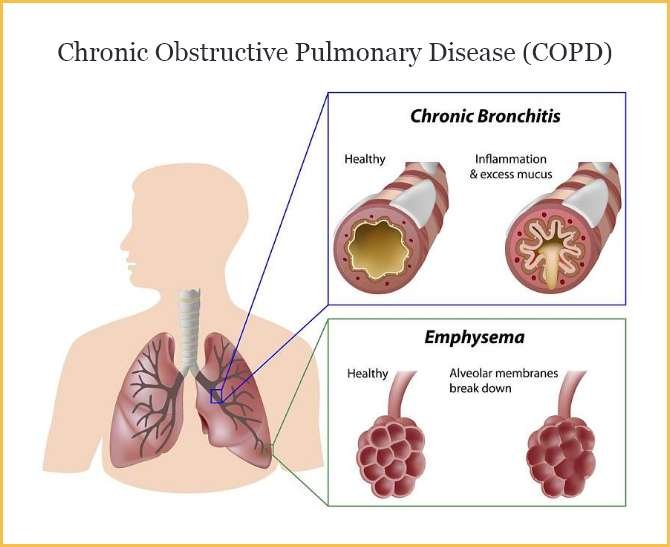
Chronic Obstructive Pulmonary Disease (COPD) is a progressive, chronic lung disease that causes persistent airflow limitation that is not fully reversible. It makes it increasingly hard for the patient to breathe over time.
COPD is an umbrella term that includes two main conditions:
- Chronic Bronchitis – inflammation of the airways with excess mucus
- Emphysema – damage to the alveoli (air sacs)
🌍 Fact: COPD is a major cause of illness and death worldwide. Smoking is the single most important risk factor, but long-term exposure to air pollution and biomass fuel smoke (common in households) also causes it.
🆚 Emphysema vs Chronic Bronchitis (Quick Table)
| Feature | Chronic Bronchitis | Emphysema |
|---|---|---|
| Main problem | Airway inflammation + mucus | Damaged/ruptured alveoli |
| Key symptom | Chronic productive cough | Shortness of breath |
| Common term | “Blue bloater” | “Pink puffer” |
| Cause of airflow block | Excess mucus, swelling | Loss of lung elasticity, air trapping |
Note: Most COPD patients have a combination of both conditions.
⚠️ Causes & Risk Factors
- 🚬 Tobacco smoking – most common cause (65-70+ of cases)
- 🔥 Air pollution & biomass/solid fuel smoke
- 🏭 Occupational dust & chemicals
- 🧬 Genetics – rare alpha-1 antitrypsin (AAT) deficiency
- 🫁 Frequent lung infections in childhood
- 🧓 Age – risk increases with age
🤒 Common Symptoms
- 🌬️ Shortness of breath (dyspnea) – worsens over time
- 😮💨 Chronic cough – often productive (with sputum)
- 🎵 Wheezing
- 📩 Chest tightness
- 🥱 Fatigue & low energy
- 🪶 Unintentional weight loss (late stage)
- 🩸 Frequent respiratory infections
💡 Key feature: Symptoms are progressive and worse on exertion.
💡 Memory Trick – “Blue Bloater vs Pink Puffer”
Chronic Bronchitis = “Blue Bloater”
- Blue (cyanosis due to low oxygen)
- Bloated (fluid retention, weight gain)
- Chronic cough + mucus
Emphysema = “Pink Puffer”
- Pink (normal color, breathless)
- Puffs (pursed-lip breathing)
- Shortness of breath + barrel chest
🔍 Diagnosis – How is COPD Confirmed?
- Spirometry – the gold standard / mandatory test
- Post-bronchodilator FEV1/FVC < 0.70 = confirms persistent airflow obstruction
- Chest X-ray – rule out other conditions
- ABG (Arterial Blood Gas) – check oxygen & CO2 levels (respiratory failure)
- Patient history & symptoms + risk factor exposure
⚠️ Per GOLD guidelines, spirometry is REQUIRED to establish the diagnosis — symptoms alone are not enough.
📊 GOLD Spirometry Severity Stages (FEV1 % predicted)
Applies when airflow obstruction (FEV1/FVC < 0.70) is present:
| GOLD Stage | Label | FEV1 (% predicted) |
|---|---|---|
| GOLD 1 | Mild | ≥ 80% |
| GOLD 2 | Moderate | 50–79% |
| GOLD 3 | Severe | 30–49% |
| GOLD 4 | Very Severe | < 30% |
Also assessed: Symptoms (mMRC / CAT score) + exacerbation history → Groups A, B, E that guide treatment.
🚨 Acute COPD Exacerbation (Emergency)
Triggered by: Infection (common) or air pollution.
Warning signs:
- 🔴 Increased shortness of breath
- 🔴 More sputum / change in color (yellow/green)
- 🔴 Increased cough & wheezing
- 🔴 SpO2 below 90%
- 🔴 Confusion, drowsiness (CO2 retention → danger)
Emergency management:
- Oxygen (aim SpO2 88–92% — careful in CO2 retainers)
- Bronchodilators (nebulized salbutamol)
- Systemic corticosteroids
- Antibiotics (if infection present)
- Nebulizers, BiPAP, or ventilation in severe cases
⚠️ Give oxygen carefully — high flow can suppress the breathing drive in chronic CO2 retainers.
💊 Treatment & Management (Stable COPD)
1. Bronchodilators (Mainstay)
- Short-acting (SABA/SAMA) – quick relief, e.g., Salbutamol
- Long-acting (LABA/LAMA) – 24-hr control (first-line daily therapy)
2. Inhaled Corticosteroids (ICS)
- Added for patients with recurrent exacerbations or higher eosinophils
3. Oxygen Therapy
- Long-term oxygen in chronic hypoxemia (SpO2 < 88%)
4. Pulmonary Rehabilitation
- Exercise training + education + breathing techniques
5. Vaccinations
- Influenza & Pneumococcal vaccines (prevent exacerbations)
🏠 Breathing Techniques (Teach Patients!)
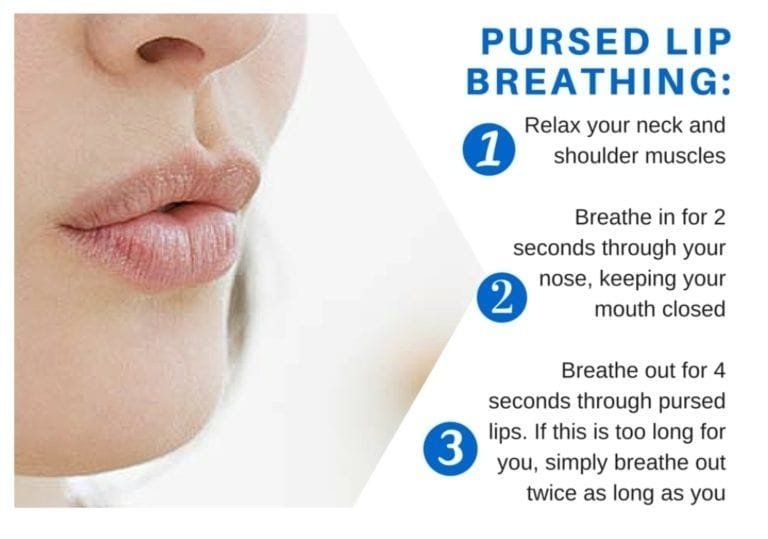
Pursed-Lip Breathing
- Breathe in slowly through the nose
- Pucker lips (like whistling)
- Breathe out slowly through pursed lips (longer exhale)
Why: Keeps airways open longer, improves gas exchange, reduces breathlessness.
🩺 Role of a Nurse in COPD Care
- Assess – respiratory rate, breath sounds, SpO2, signs of distress
- Monitor – ABG, oxygen, vital signs
- Administer – oxygen, bronchodilators, medications safely
- Teach breathing techniques (pursed-lip, diaphragmatic)
- Position – high Fowler’s / tripod position to ease breathing
- Educate – smoking cessation (single most important!)
- Postural drainage & chest physiotherapy
- Energy conservation & nutrition counselling
- Emotional support (depression is common)
- Document & coordinate with the healthcare team
🚭 Prevention & Self-Management (Patient Education)
- ✅ Quit smoking – the most important step
- ✅ Avoid triggers – smoke, dust, pollution
- ✅ Take medicines daily, even when feeling fine
- ✅ Use inhalers with correct technique
- ✅ Keep vaccinations up to date
- ✅ Maintain healthy diet & weight
- ✅ Exercise regularly (pulmonary rehab)
- ✅ Recognize early signs of exacerbation
- ✅ Have an asthma/COPD action plan & know when to seek help
❓ Frequently Asked Questions (FAQ)
Q1. Can COPD be cured? No, COPD is progressive and not curable, but it can be managed so symptoms are controlled and quality of life improves.
Q2. What is the required test to diagnose COPD? Spirometry — a post-bronchodilator FEV1/FVC < 0.70 confirms the diagnosis.
Q3. What is the difference between emphysema and chronic bronchitis? Emphysema damages the alveoli; chronic bronchitis inflames the airways with excess mucus. Both are forms of COPD.
Q4. Why is “pursed-lip breathing” taught? It prolongs exhalation, prevents airway collapse, and improves gas exchange.
Q5. Why give oxygen carefully in COPD? Chronic COPD patients may rely on low oxygen levels to drive breathing (hypoxic drive). Too much oxygen can suppress breathing and cause CO2 retention.
🎯 Quick Quiz (Test Yourself)
Q1: What is the mandatory diagnostic test for COPD? Q2: A patient with COPD and chronic cough with mucus is called a “___”. Q3: What is the single most important step in COPD management?
💬 Write your answers in the comments below!
📌 Key Takeaways
- ✅ COPD = progressive, not fully reversible airflow obstruction
- ✅ Includes chronic bronchitis + emphysema
- ✅ Spirometry (FEV1/FVC < 0.70) = confirms diagnosis
- ✅ GOLD stages 1–4 based on FEV1%
- ✅ “Blue bloater” (bronchitis) vs “Pink puffer” (emphysema)
- ✅ Smoking cessation = most important step
- ✅ Nurse’s role = breathing techniques, education, monitoring
📚 Sources & References
- Global Initiative for Chronic Obstructive Lung Disease (GOLD) 2024 Report – https://goldcopd.org
- World Health Organization (WHO) –https://who.int
- Mayo Clinic – https://mayoclinic.org
- RegisteredNurseRN / Nurseslabs nursing guides
