⭐ Understand asthma in minutes with this simple nursing guide
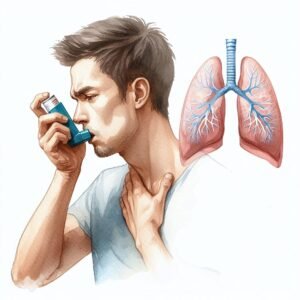
📌 Introduction – What is Asthma?
Asthma is a chronic inflammatory disease of the airways. It causes:
- Airway inflammation (swelling)
- Bronchoconstriction (airway narrowing)
- Excess mucus production
This leads to recurrent episodes of wheezing, breathlessness, chest tightness, and coughing — which can be reversible with treatment.
🌍 Fact: According to WHO, asthma affects more than 300 million people worldwide, and this is rising every year.
🤔 Why Does Asthma Happen? (Pathophysiology)
In a person with asthma, the airways are oversensitive (hyperreactive). When triggered, the airway walls:
- Swell (inflammation)
- Tighten (bronchospasm — smooth muscle contraction)
- Fill with mucus (mucus hypersecretion)
Result: Narrower airways = harder to breathe.
🎯 Common Triggers (What Causes an Attack?)
- 🐜 Allergens — dust mites, pollen, pet dander, mold
- 🚬 Smoke — tobacco smoke, air pollution
- 🧊 Cold air or sudden weather changes
- 🏃 Exercise (exercise-induced asthma)
- 😷 Respiratory infections (cold, flu)
- 💊 Certain medications (aspirin, NSAIDs)
- 😰 Stress & strong emotions
- 🤢 GERD (acid reflux)
🤒 Common Symptoms
- 🫁 Wheezing (whistling sound while breathing)
- 🌬️ Shortness of breath (dyspnea)
- 📩 Chest tightness
- 😮💨 Cough — often worse at night or early morning
- 🥱 Fatigue due to labored breathing
💡 Trick: Symptoms often get worse at night and during exercise or exposure to triggers.
🚨 Acute Severe Asthma – Emergency Signs (DANGER)
⚠️ Call for emergency help if the patient has:
| Danger Sign | What It Means |
|---|---|
| Silent chest (no wheezing) | Airway almost completely blocked |
| Speaking single words / unable to talk | Severe breathing difficulty |
| Cyanosis (bluish lips/fingers) | Low oxygen |
| Confusion / drowsiness | Low oxygen to brain |
| Exhaustion (“tiring out”) | Respiratory failure risk |
| Fast heart rate + use of chest/neck muscles | Severe distress |
This is a life-threatening emergency — oxygen + urgent treatment needed immediately.
🔍 Diagnosis – How is Asthma Confirmed?
- Spirometry – THE key test (shows airflow obstruction)
- Peak Expiratory Flow (PEF) – using peak flow meter
- Chest X-ray – to rule out other diseases
- Allergy testing – identify triggers
- ABG (Arterial Blood Gas) – in severe cases to check oxygen/CO2
- History & physical exam – symptom pattern
💊 Treatment & Management
1. Relievers (Quick Relief — for attacks)
- Short-acting beta-2 agonists (SABA) – e.g., Salbutamol (albuterol)
- Used immediately when symptoms appear
- Provide fast bronchodilation
2. Controllers (Daily Long-term Control)
- Inhaled Corticosteroids (ICS) – reduce airway inflammation (e.g., Budesonide, Fluticasone)
- Long-acting beta-2 agonists (LABA) – in combination
- Leukotriene receptor antagonists (LTRA)
- Taken daily to prevent attacks
⚠️ Never use reliever alone for long-term control. Follow doctor’s plan.
3. Acute Severe Attack (In Hospital)
- Oxygen therapy (for hypoxia)
- Nebulized SABA (salbutamol) — repeated
- IV/Systemic corticosteroids (reduce inflammation)
- Ipratropium bromide (add-on)
- IV Magnesium sulfate (severe cases, relaxes airway muscle)
- Maybe BiPAP, or intubation in extreme cases
🩺 Role of a Nurse in Asthma Care
- Assess – peak flow, oxygen saturation, breathing effort
- Administer medications (nebulizer, inhaler, oxygen)
- Teach correct inhaler technique (very important!)
- Educate on triggers and avoiding them
- Provide written asthma action plan
- Monitor for signs of deterioration
- Reassure anxious patient
- Document vital signs and response to treatment
- Follow-up and health talk in the community
🏠 Patient Education (Important for Students/NCLEX)
Teach patients:
- ✅ Correct inhaler/spacer use
- ✅ Use a peak flow meter daily
- ✅ Recognize early warning signs of an attack
- ✅ Have a written asthma action plan (green/yellow/red zones)
- ✅ Avoid triggers (dust, smoke, pollen)
- ✅ Take controllers daily, even when feeling fine
- ✅ Know when to seek emergency care
💡 Memory Trick – “W – C – T – C”
Symptoms of Asthma:
- Wheezing
- Chest tightness
- Trouble breathing (dyspnea)
- Coughing (worse at night)
Remember “WCTC” and never miss asthma symptoms!
❓ Frequently Asked Questions (FAQ)
Q1. Is asthma curable? No, asthma is a chronic condition with no cure, but it can be well-controlled with proper treatment so symptoms are minimal and life is normal.
Q2. What is the most important diagnostic test for asthma? Spirometry is the preferred test to confirm asthma.
Q3. What are relievers vs controllers?
- Relievers (SABA) = quick relief during an attack
- Controllers (ICS) = daily medicine to prevent attacks
Q4. Why does wheezing disappear in severe asthma? A silent chest means the airway is so constricted that very little air moves — this is a danger sign, not improvement.
Q5. Can exercise trigger asthma? Yes, exercise-induced asthma is common. Warm-up and pre-medication help manage it.
🎯 Quick Quiz (Test Yourself)
Q1: What is the key diagnostic test for asthma? Q2: Name one emergency (danger) sign of acute severe asthma. Q3: Relievers are used for what purpose?
💬 Write your answers in the comments below!
📚Sources and References
https://nurseslabs.com/asthma/
📌 Key Takeaways
- ✅ Asthma = chronic airway inflammation + bronchoconstriction + mucus
- ✅ Common symptoms = Wheezing, Chest tightness, Cough, Dyspnea
- ✅ Spirometry = key diagnostic test
- ✅ Relievers = quick relief; Controllers = daily prevention
- ✅ Silent chest = danger sign (emergency)
- ✅ Nurse’s role = education + inhaler technique + monitoring
