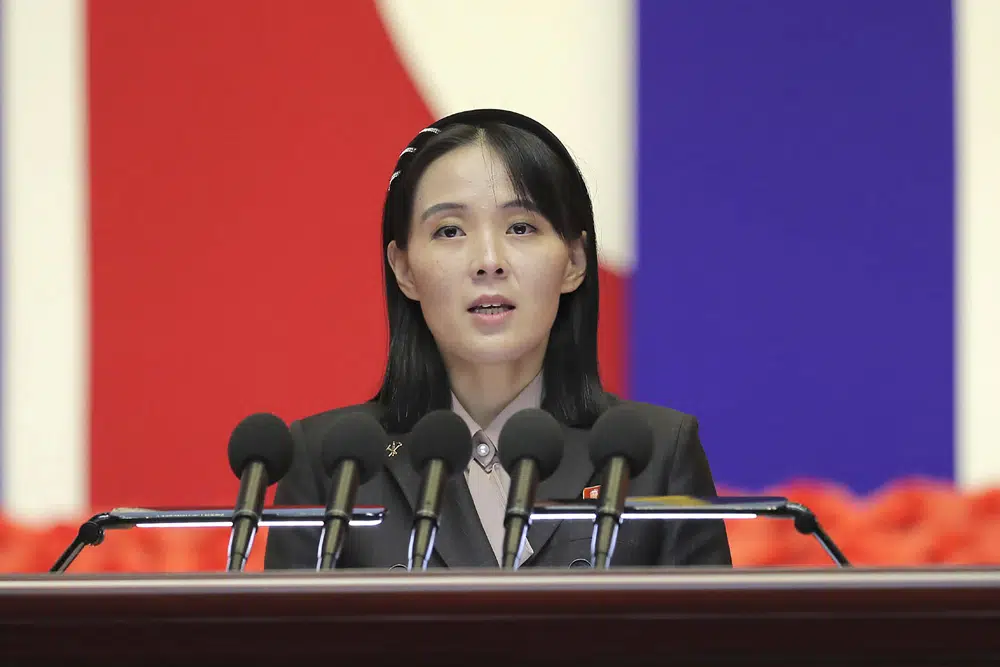
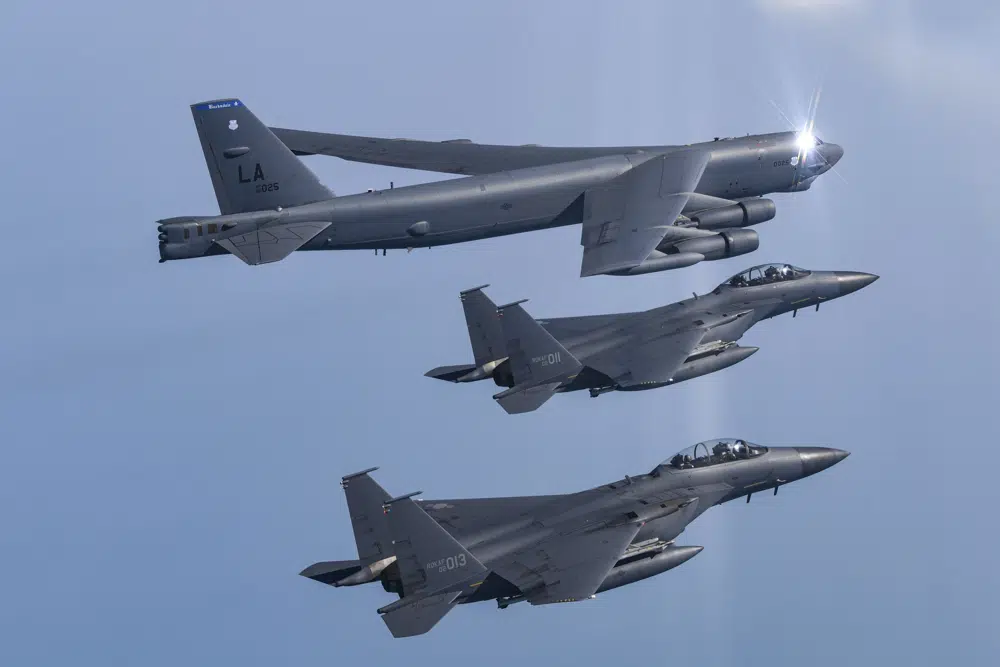
A day after the United States flew a nuclear-capable B-52 bomber in a show of force against the North, the prominent sister of North Korea’s leader warned Tuesday that her country is prepared to take “quick, overwhelming measures” against it and South Korea.
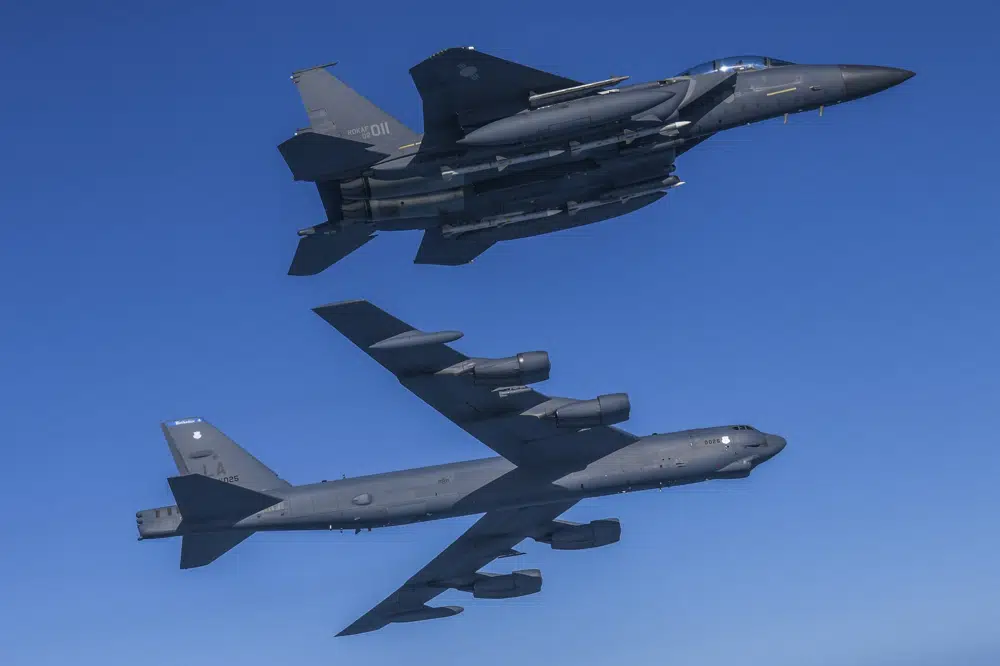
The B-52 bomber training exercise between the United States and South Korea on Monday over the Korean Peninsula was the most recent in a string of exercises between the allies in recent months.
In her statement, Kim Yo Jong made no mention of any intended activities, but in the past, North Korea has frequently conducted missile tests in retaliation for joint military exercises with South Korea because it sees them as a practice for an invasion.
Kim’s sister warns N. Korea ready to act against US : “We maintain our eye on the restless military actions by the U.S. forces and the South Korean puppet military and are always on standby to take appropriate, fast and overwhelming action at any time according to our judgment,” Kim Yo Jong said in the statement reported by state media.
“Undoubtedly, the feverish rhetoric and demonstrative military actions by the United States and South Korea give (North Korea) the conditions for being pushed to do something to deal with them,” she added.
The Korean People’s Army’s General Staff said it put its front-line artillery units on alert and increased surveillance efforts after it discovered a live-fire artillery drill by “the enemy” near the South Korean border town of Paju on Tuesday morning, hours after Kim’s remarks.
The South Korean practice, which the General Staff termed as a “very grave military provocation” that increased tensions, it claimed saw the firing of roughly 30 rounds, and it urged its opponent to immediately cease such border-area actions.
The Joint Chiefs of Staff of South Korea dismissed the North’s assertion as absurd and refuted the South’s military’s use of artillery at the firing range the North was making reference to.
After the training on Monday, the South Korean Defense Ministry stated that the B-52’s deployment showed the allies’ capacity to prevent North Korean aggression. Earlier this year, the US sent B-1B bombers to the region a few times. As part of an exercise last month in Washington, the United States and South Korea also practiced how to respond to nuclear threats from North Korea.
Last Friday, the South Korean and U.S. militaries declared they would perform a computer-simulated command post training from March 13-23 and restore their largest springtime field exercises that were last held in 2018.
Since 2018, the allies have scaled back or discontinued some of their routine exercises in order to support their now-dormant diplomatic efforts with North Korea and prepare for the COVID-19 pandemic. But since North Korea last year performed a record number of missile tests and openly threatened to use its nuclear weapons in potential conflicts with its rivals, they have been resuming their drills.
The U.S. B-52 bomber’s flyover of the Korean Peninsula, according to a second statement from North Korea’s Foreign Ministry on Tuesday, was a careless provocation that dragged the region “deeper into the bottomless quagmire.” There is “no guarantee that there will be no violent physical conflict,” the statement warned, if U.S.-South Korean military provocations persist.
When tensions with the United States and South Korea are at their highest, North Korea frequently employs venomous rhetoric. A nuclear test or the launch of a brand-new intercontinental ballistic missile with a target on the U.S. territory are two potential actions North Korea could take, according to observers.
Kim Yo Jong vowed to make the Pacific the North’s firing range last month. She stated on Tuesday that a potential American effort to intercept a North Korean ICBM would be viewed as a declaration of war by Pyongyang. She cited a South Korean media report claiming that if a North Korean ICBM is test-launched toward the Pacific, the U.S. military intends to shoot it down.
All known North Korean ICBM tests have been made at steep angles to avoid nearby countries, and the weapons landed in the waters between the Korean Peninsula and Japan.
In what was perceived as an attempt to strengthen security cooperation between Seoul, Tokyo, and Washington, South Korea made a step on Monday to ease a contentious historical dispute with Japan. The step includes a plan to use local funds to compensate Koreans who did forced labor during Tokyo’s colonial rule, but without requiring Japanese companies to contribute to the reparations.
Rahm Emanuel, the U.S. ambassador to Japan, praised the leaders of South Korea and Japan on Monday, saying that they had realized the “potential of future collaboration is more important.”
For more news, visit Decent Tech